Spaces of Translation
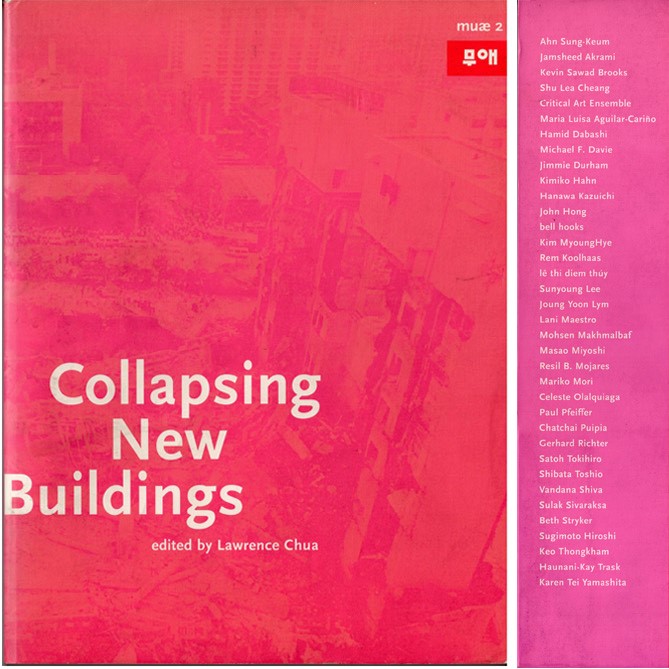
published in Muae 2: Collapsing New Buildings, Kaya Press | 1996
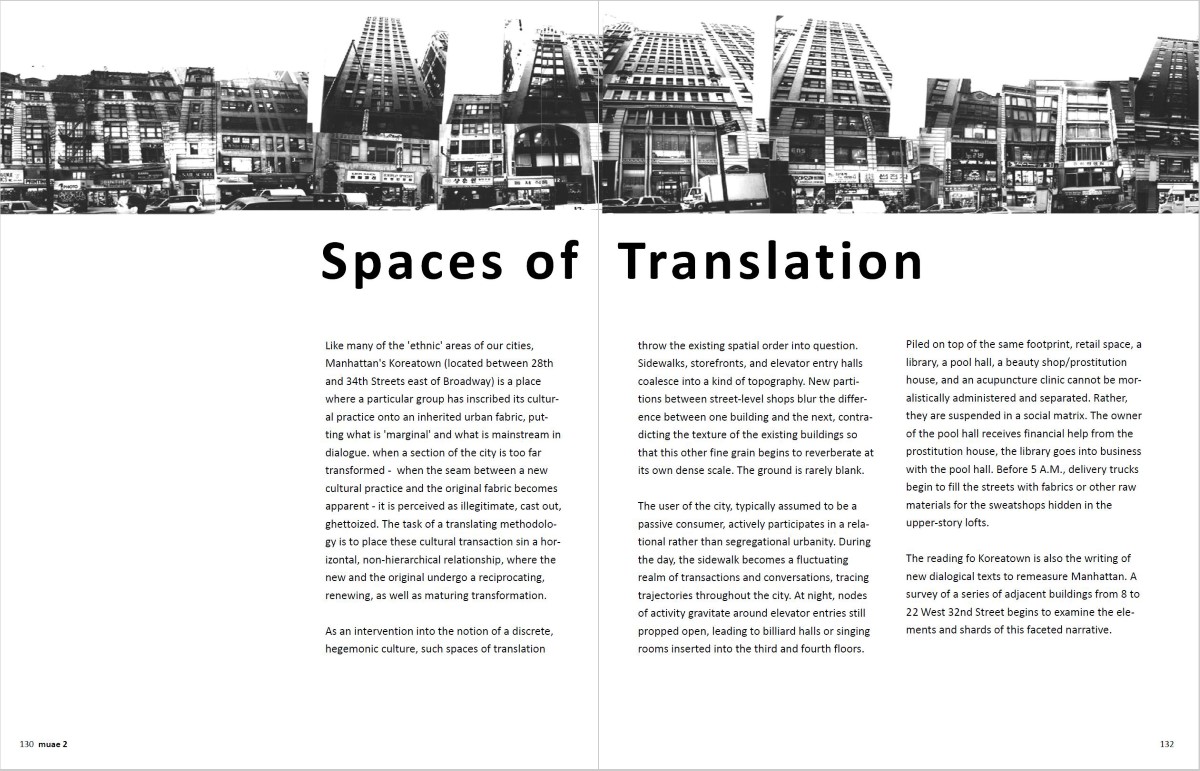
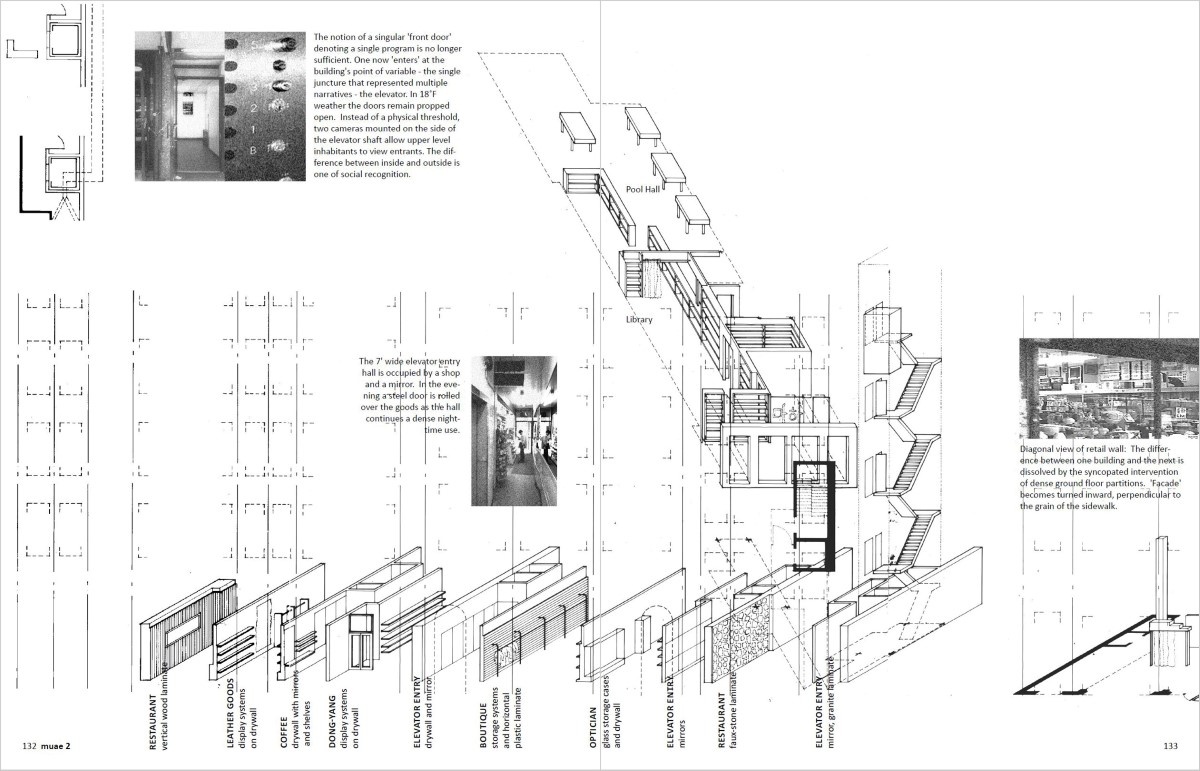
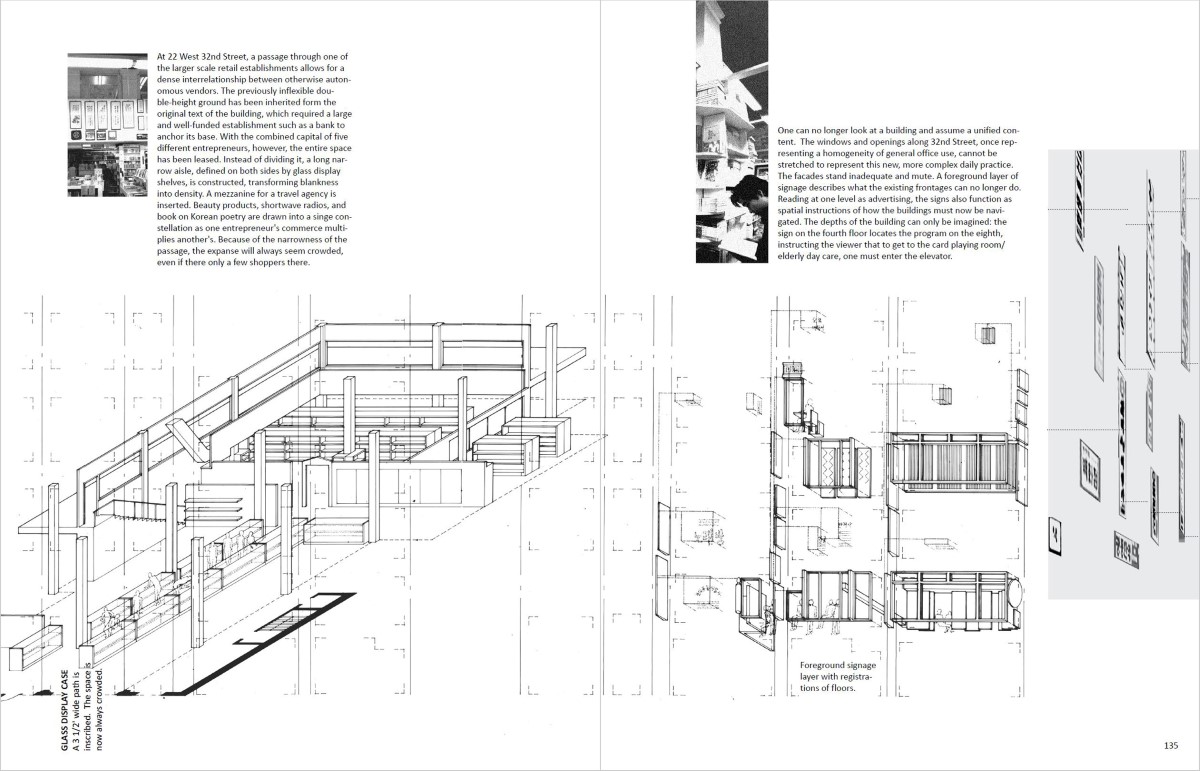
Like many “ethnic” enclaves, Manhattan’s Koreatown (28th–34th Streets east of Broadway) inscribes new cultural practices onto inherited urban fabric, placing the marginal and mainstream in dialogue. When transformation becomes too visible—when the seam between new practice and old fabric is exposed—it risks being labeled illegitimate or ghettoized. A translating methodology instead situates these exchanges horizontally, allowing original and new conditions to reshape one another through reciprocal transformation.
Such spaces challenge the idea of a singular, hegemonic culture and unsettle existing spatial orders. Sidewalks, storefronts, and elevator lobbies merge into a layered topography. New shop partitions blur building boundaries, introducing a finer grain that vibrates against the older fabric. The ground is rarely neutral.
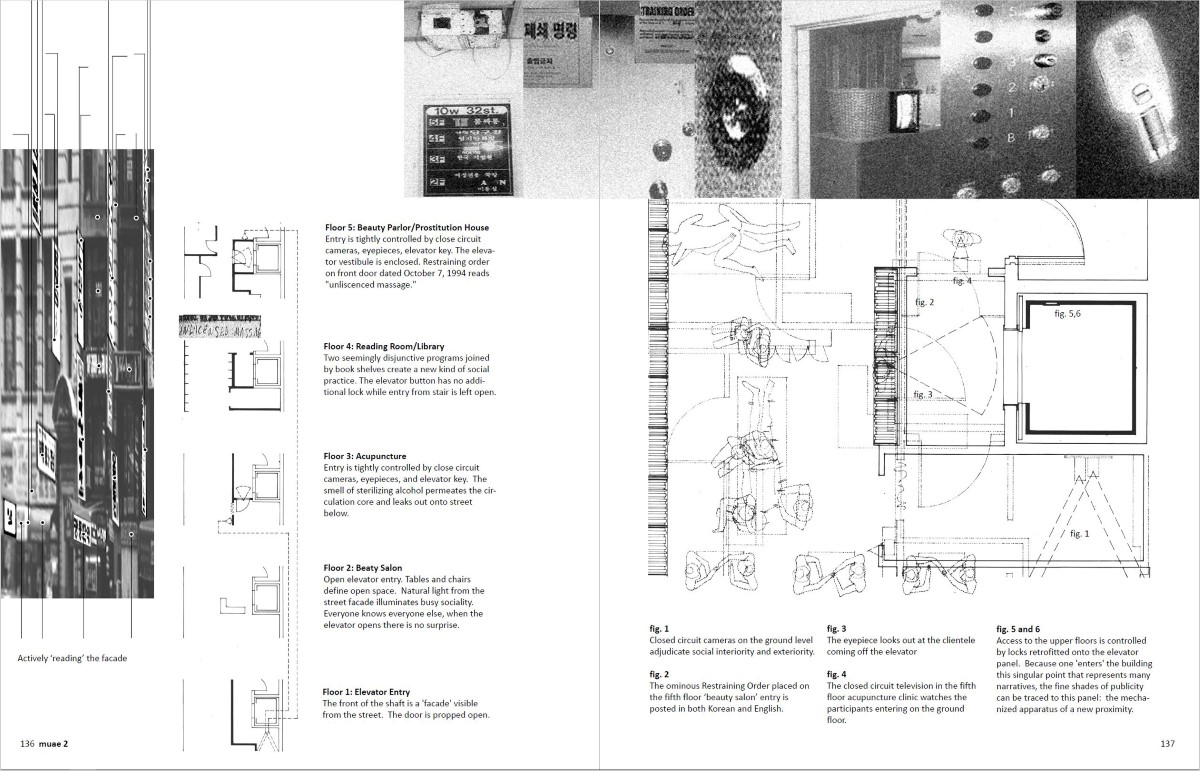
Here, the urban user is not a passive consumer but an active participant in a relational city. By day, sidewalks host transactions and conversations; by night, activity clusters around elevator cores leading to upper-floor billiard halls and karaoke rooms. Retail, library, pool hall, beauty shop, acupuncture clinic, and illicit economies overlap within the same footprint—interdependent rather than segregated.
To read Koreatown is also to rewrite Manhattan. A survey of buildings from 8 to 22 West 32nd Street traces the fragments of this layered urban narrative.
Related Posts
-

Interior City Making
Published in SPACE magazine, this article explores the Dulwich College Seoul Inquiry Hub as an “Interior City,” reimagining a children’s library as an urban landscape for learning.
-

City as Verb
City as Verb reframes the city as action rather than object, presenting 17 global cities that reveal urban life as active, participatory, and transformative.
-
Inclusive Proportions: The Egalitarian Section and the Variable Plan
Challenging fixed proportional systems, this library calibrates space for growing children — park, city, and mezzanine woven into an egalitarian spatial ecosystem.
-
Chambord: Utopian Palimpsest
Chambord’s future is a palimpsest of its past. By reimagining More’s Utopia as a tethered peninsula, this project crafts a site of constant, contingent evolution.