Chambord: Utopian Palimpsest
Chambord Inachevé International Exhibition | National Estate of Chambord | 2019
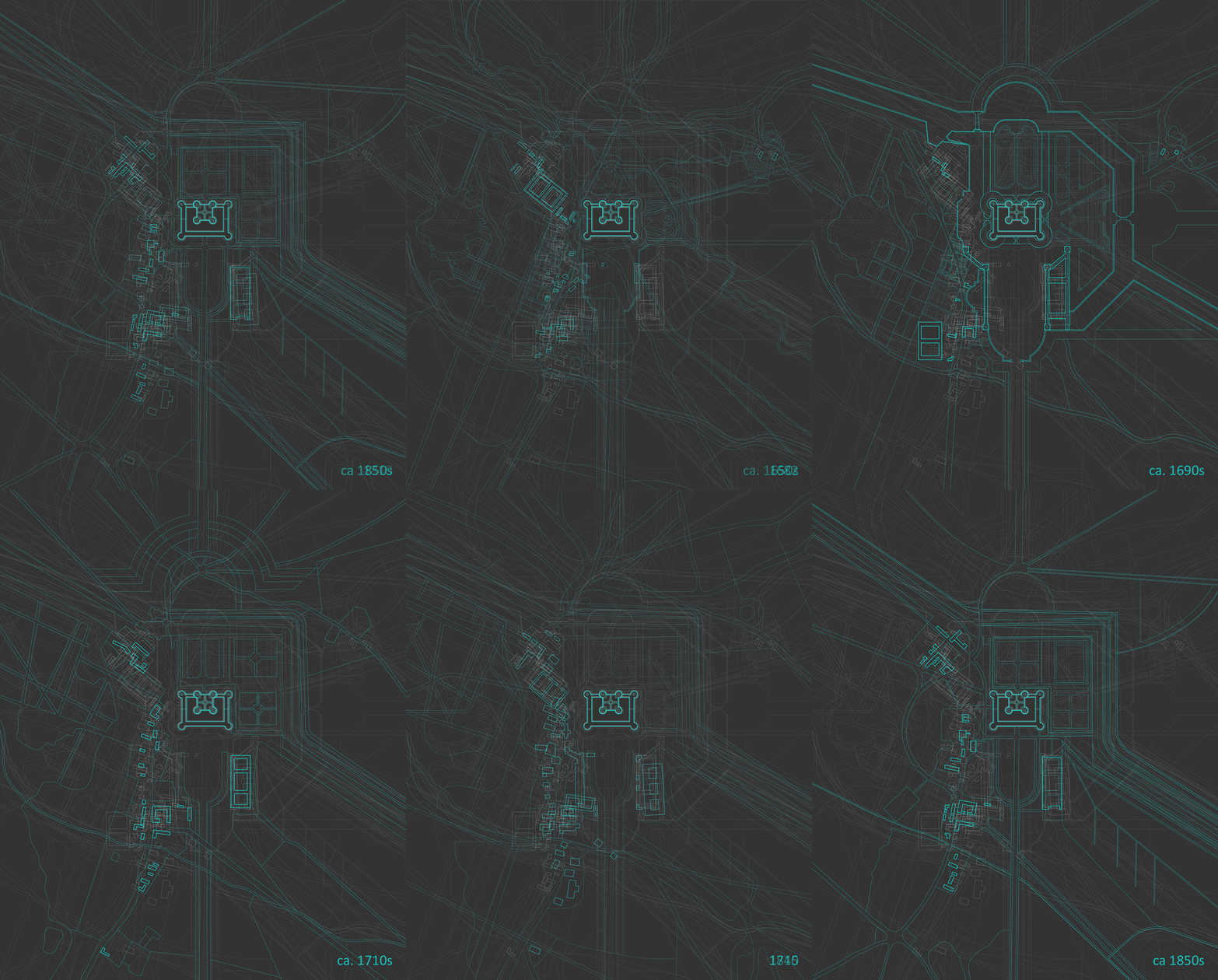
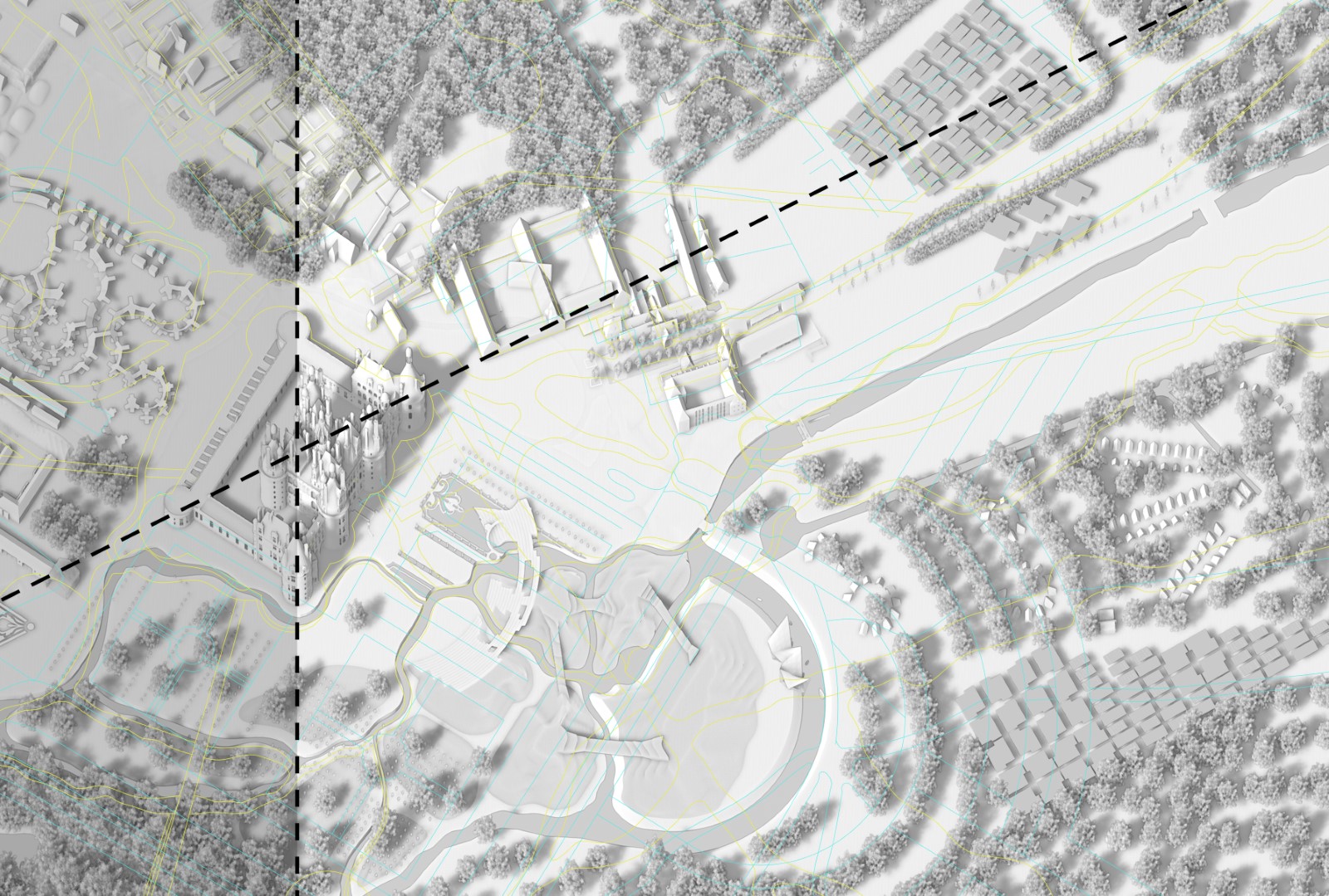
There are powerful parallels between the Château de Chambord and Sir Thomas More’s Utopia: both are unfinished allegorical works spanning past and future. What explicitly defines utopia is its radical relationship to its surrounds. More’s Utopia was famously (and incorrectly) depicted in Ambrosius Holbein’s 1518 woodcut as an island, when in fact it appeared in More’s original text as a peninsula connected to the European mainland. Utopia’s tethered condition, in dialogue with its socio-political context, conceptually binds it to the unfinished project of Chambord. Even as the château itself was conceived of as a strong figure, each shift in royal ownership marked a new conception of its exterior, and thus a new shift in defining what is utopia. Spanning from the 16thc. to current times, Chambord’s grounds have constantly evolved and devolved, from a naturalistic to highly controlled, from productive to decorative, from closed to open.
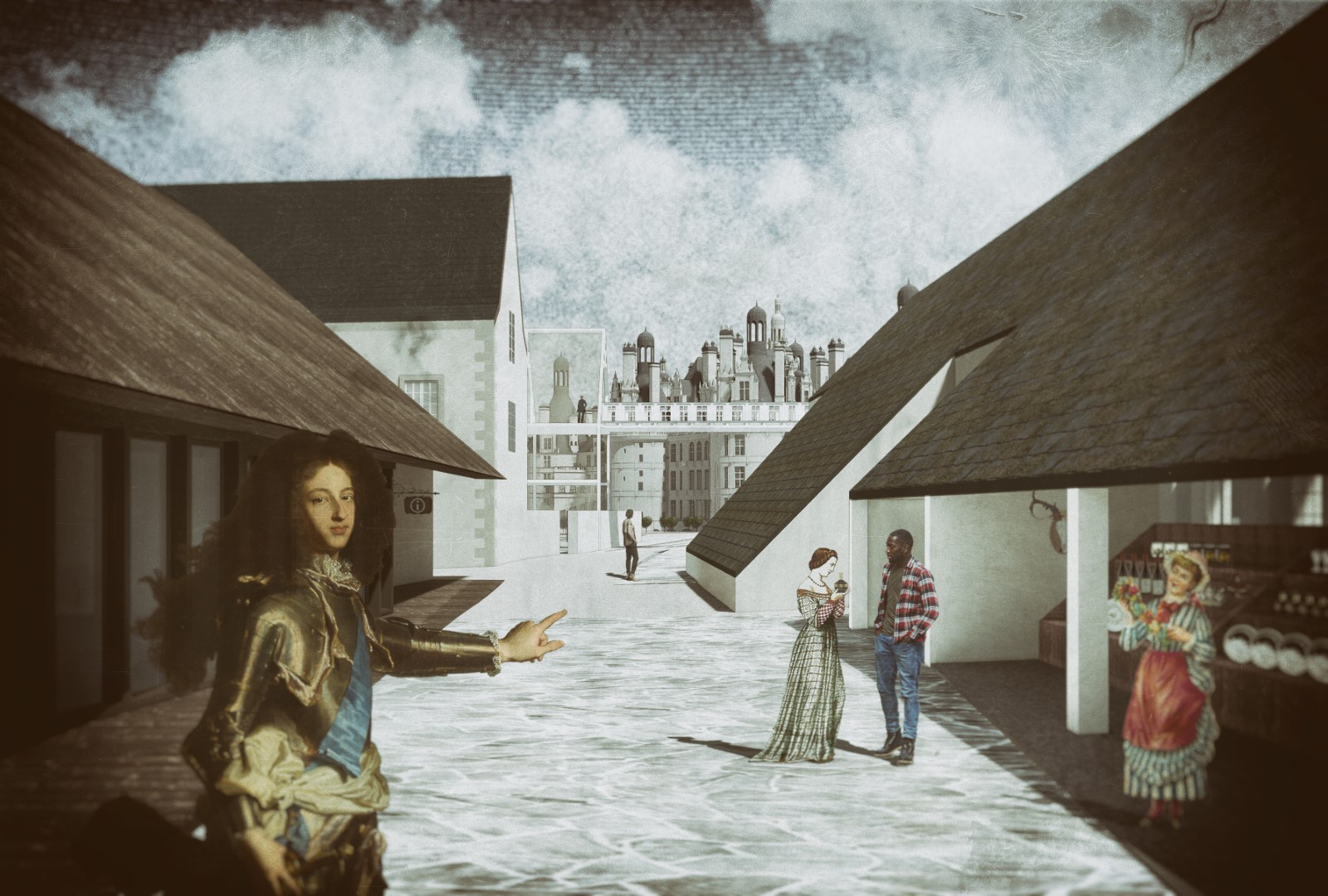
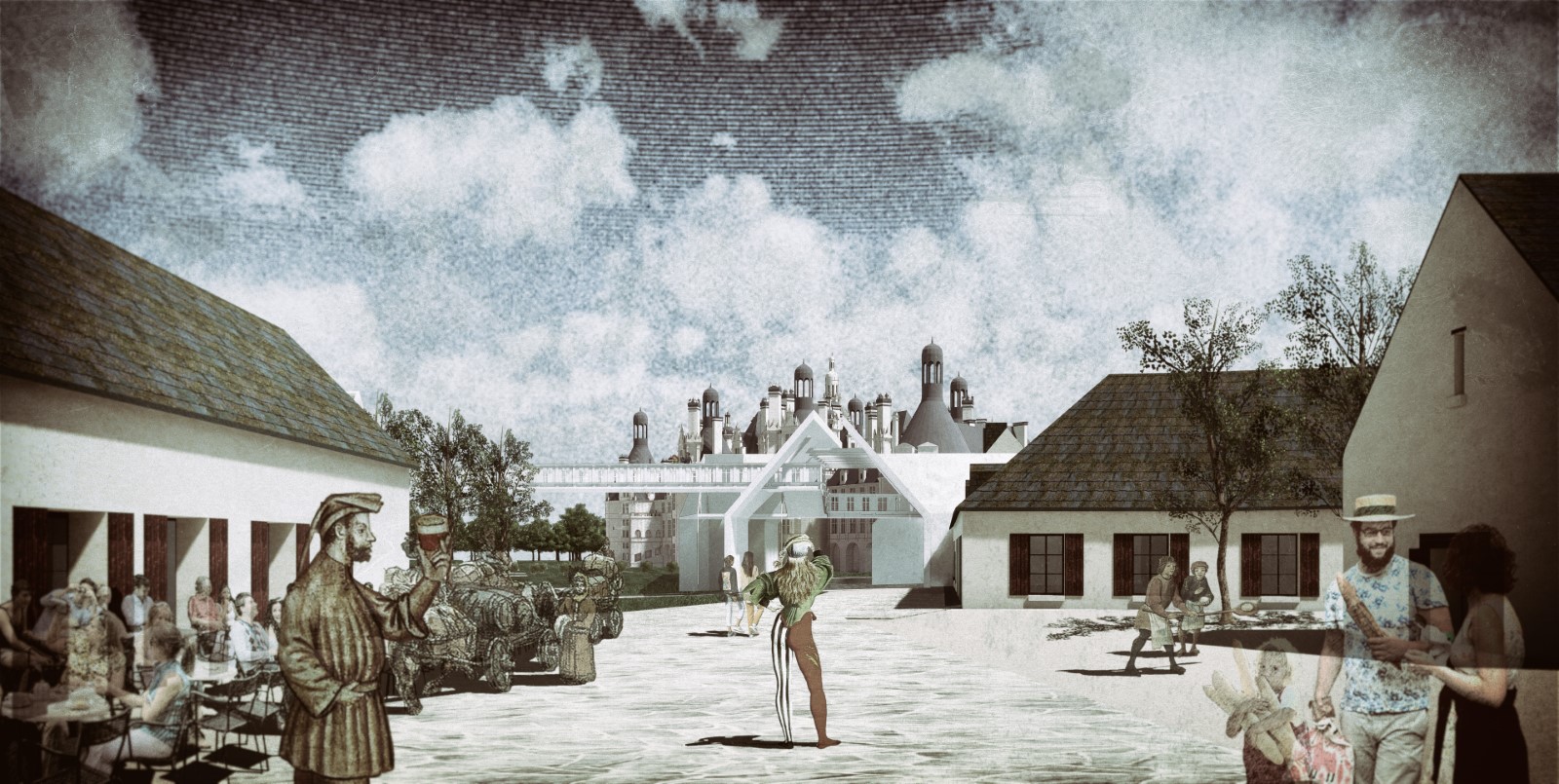
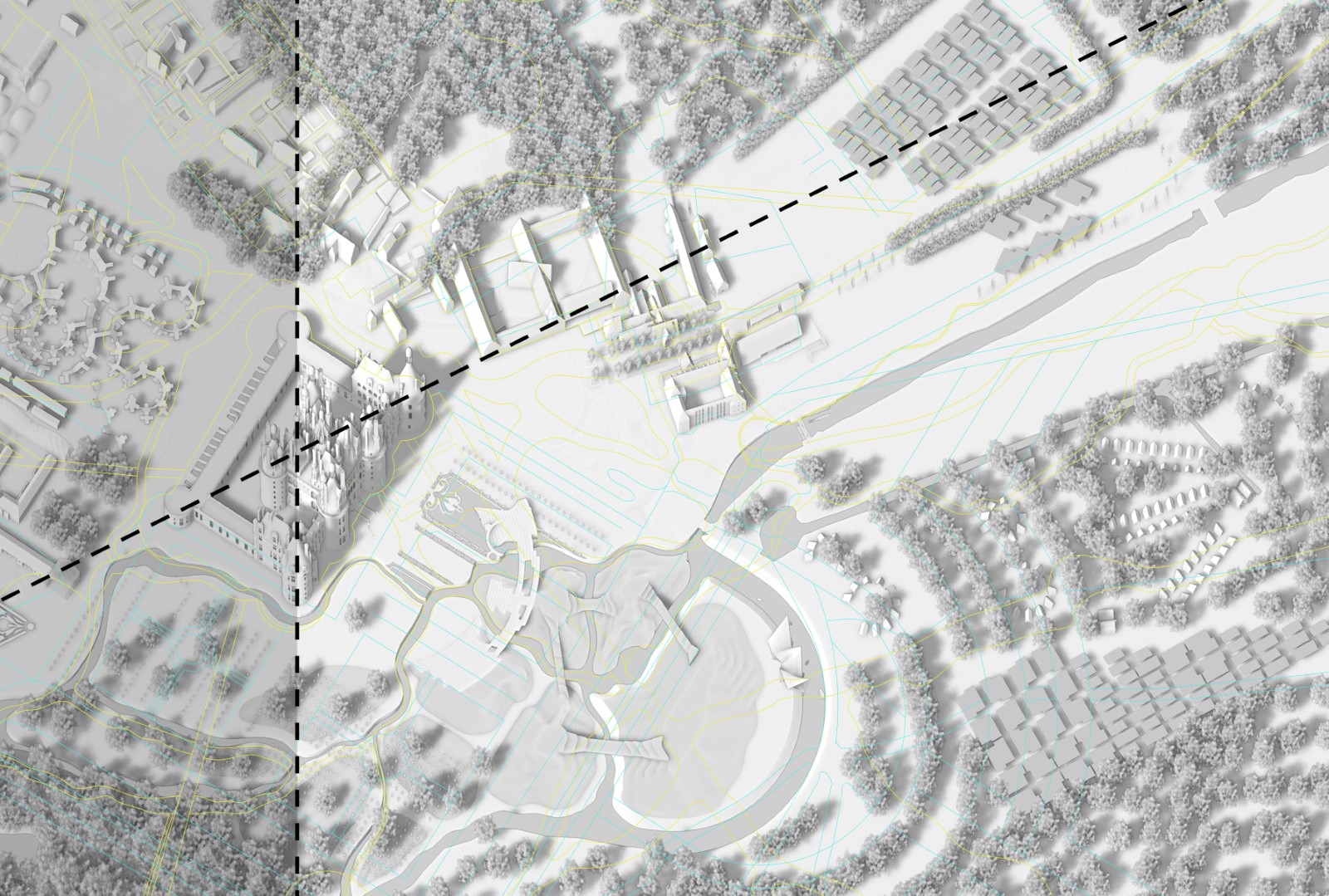
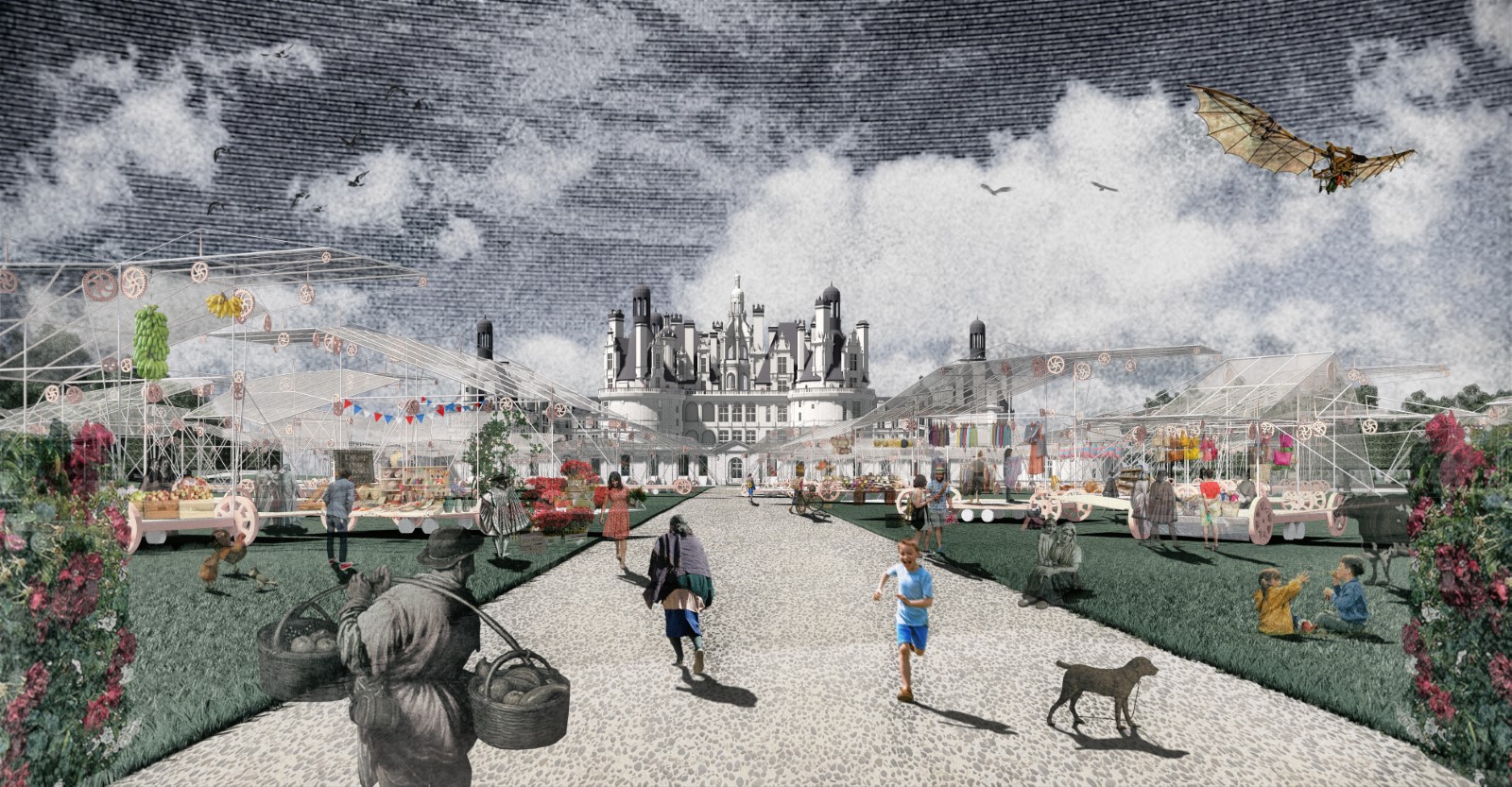
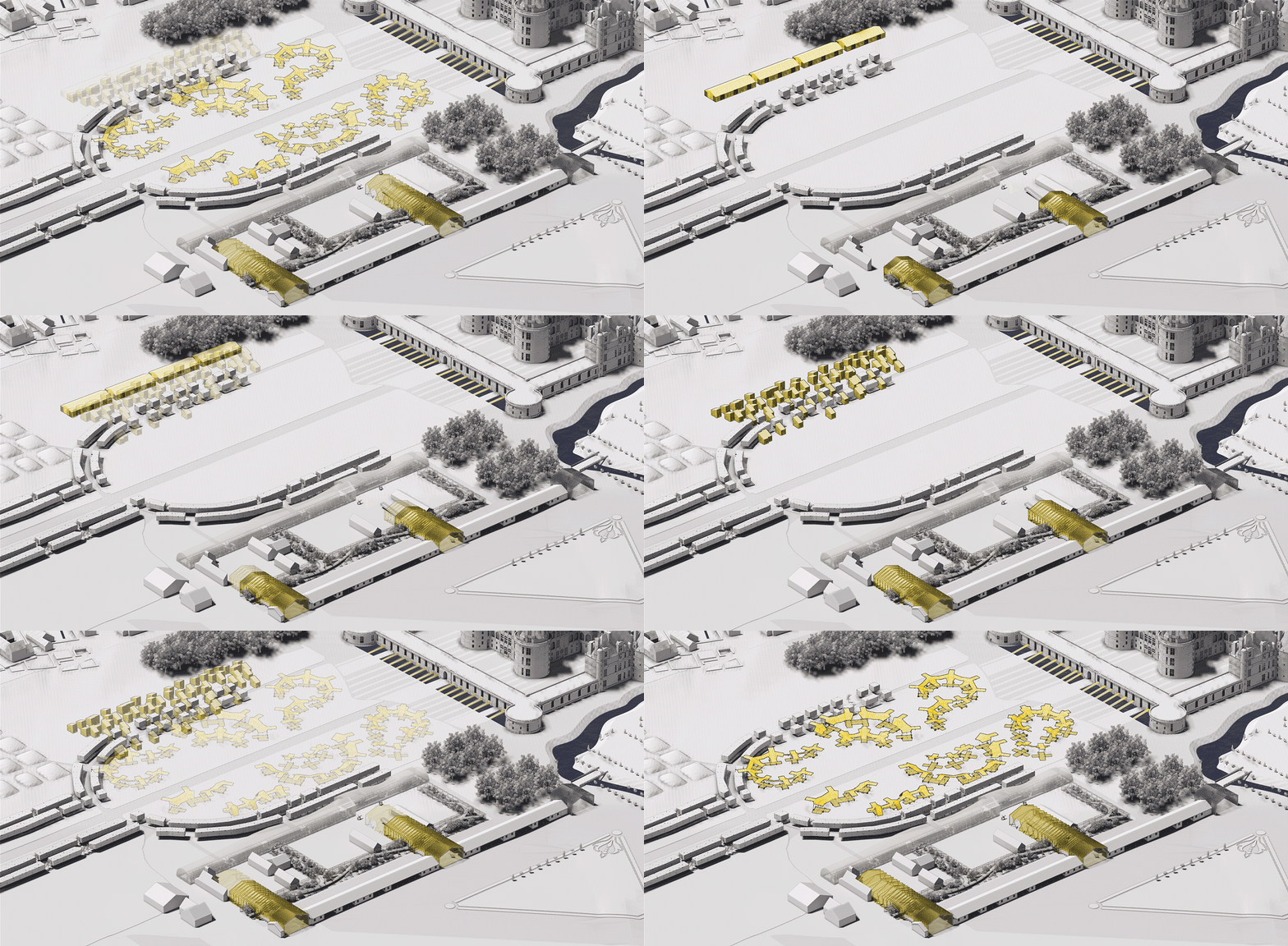
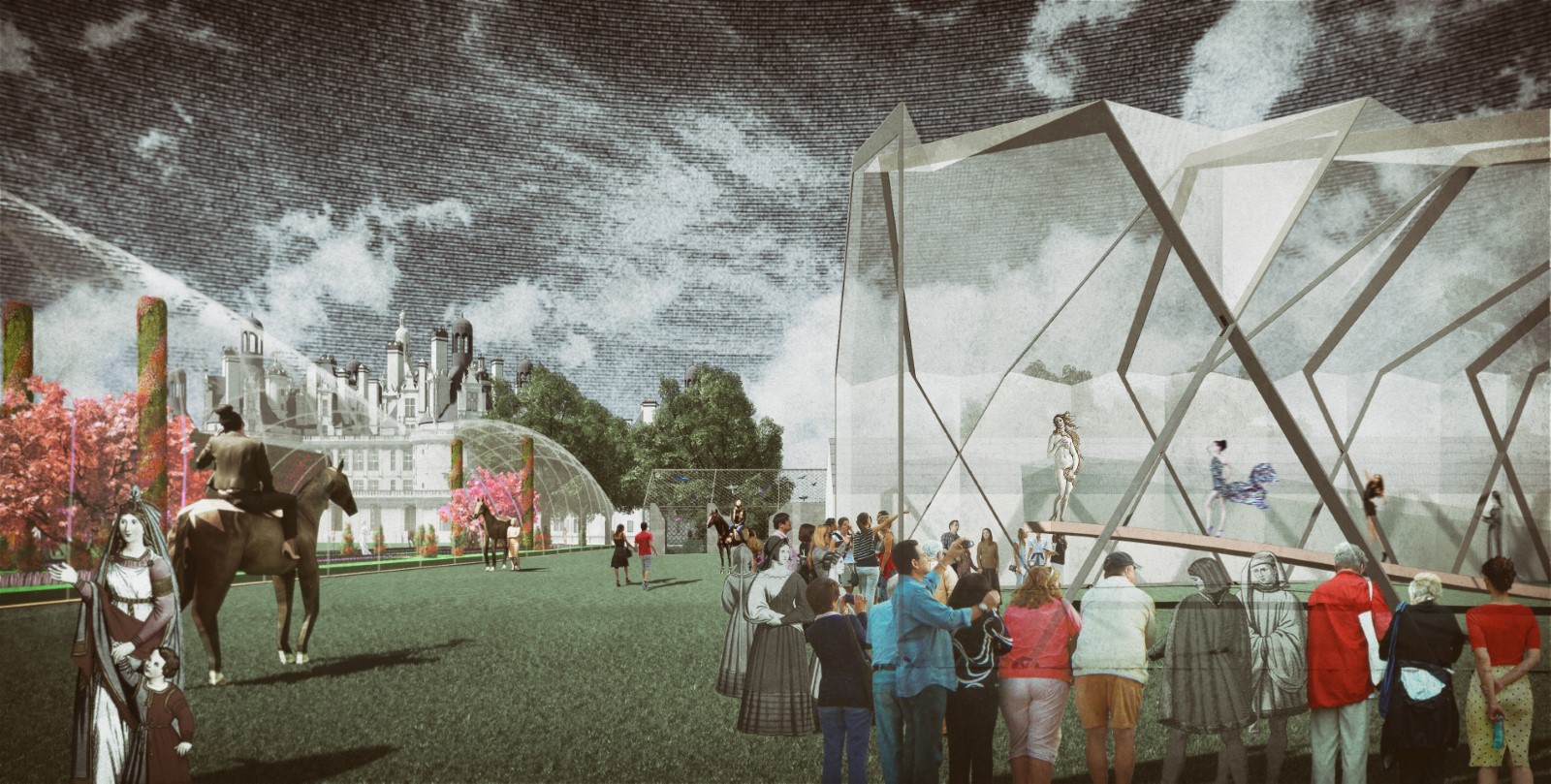
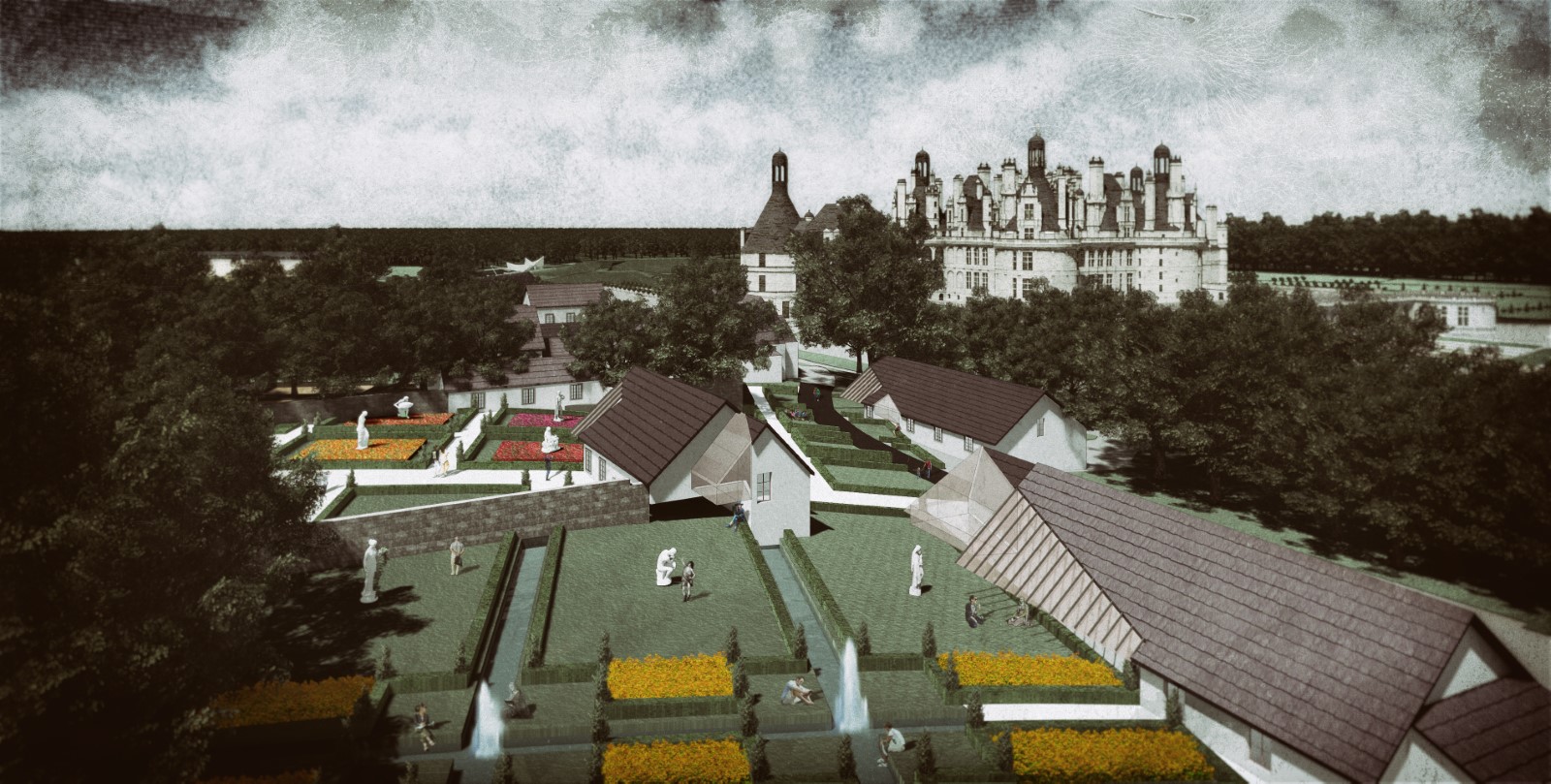
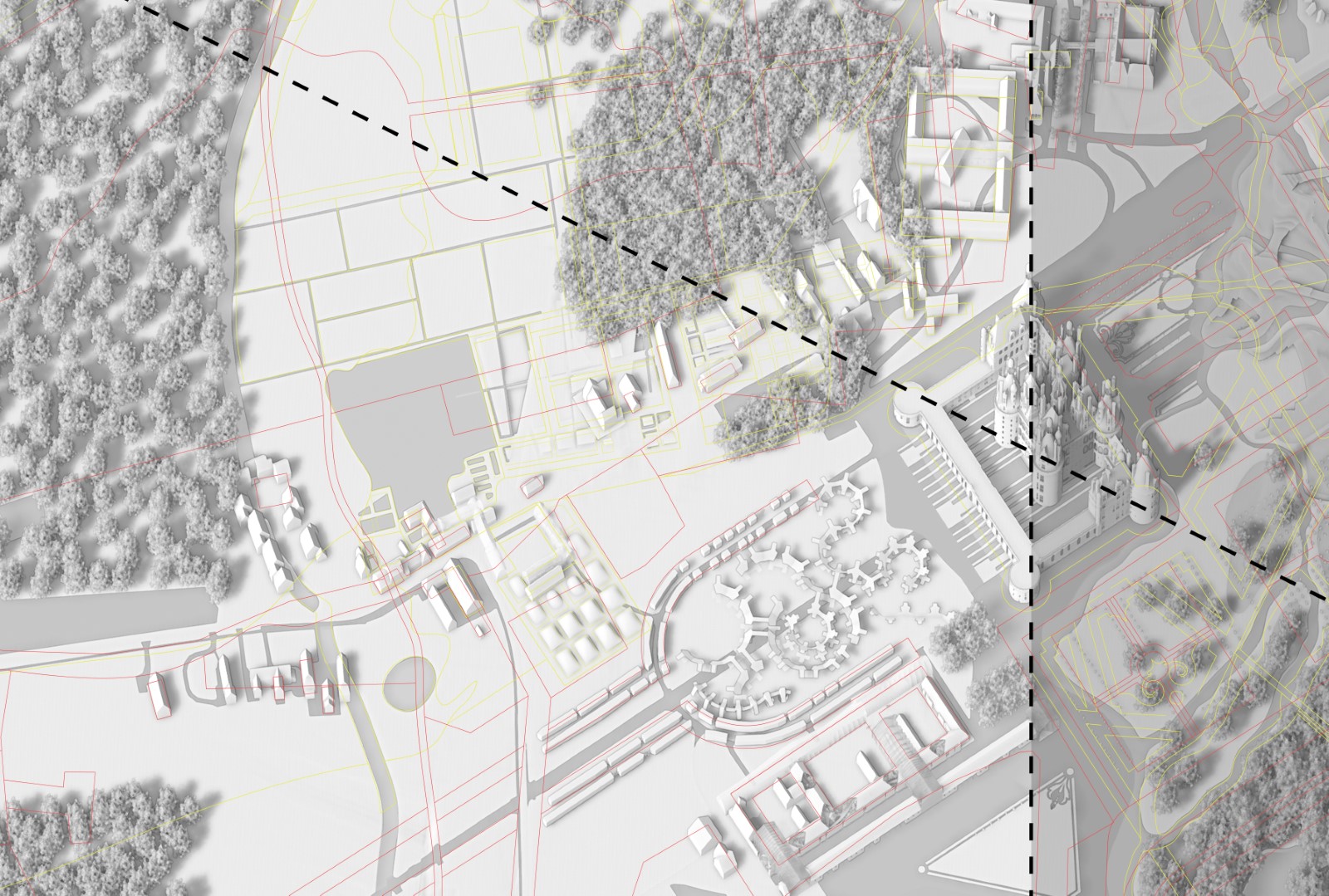
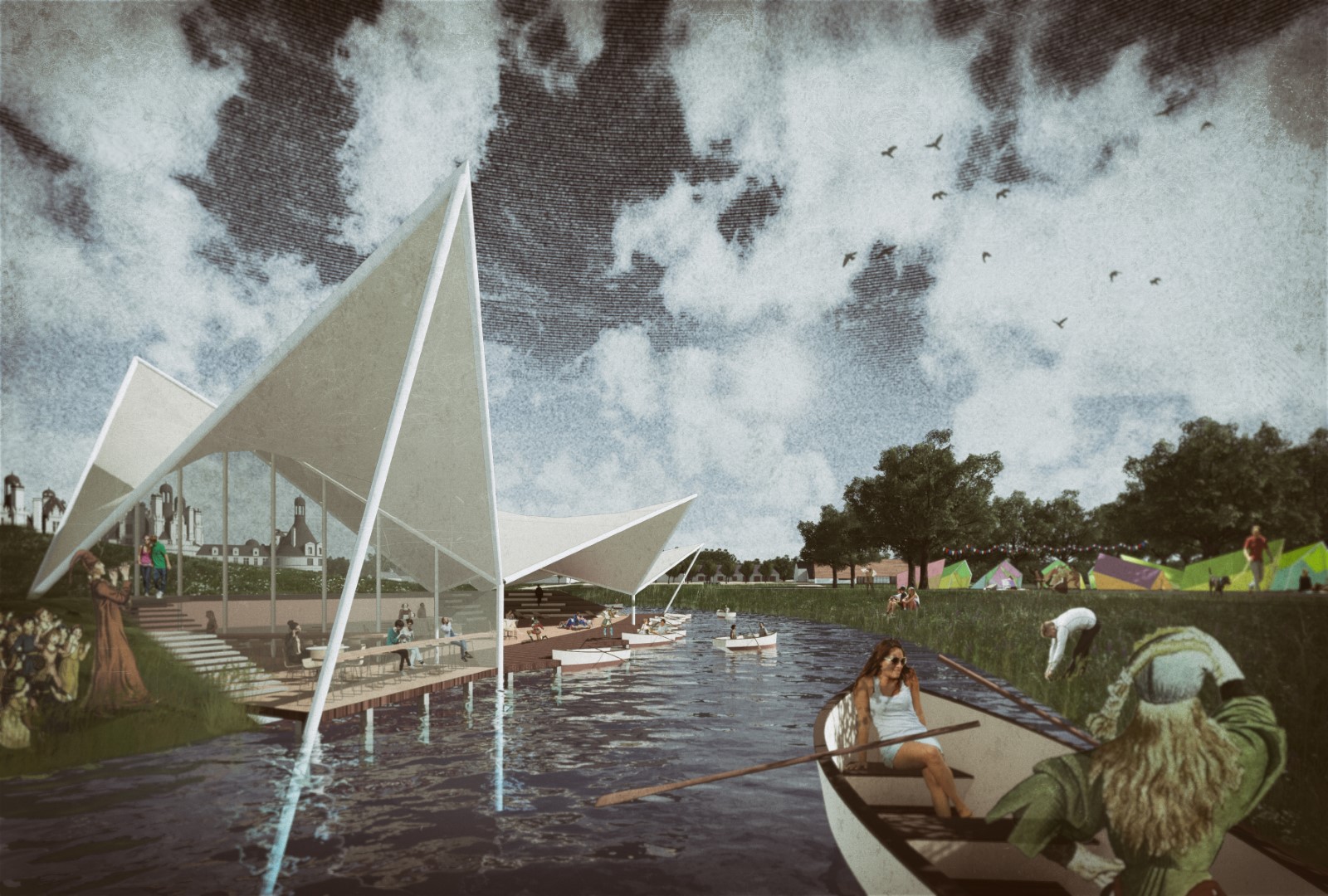
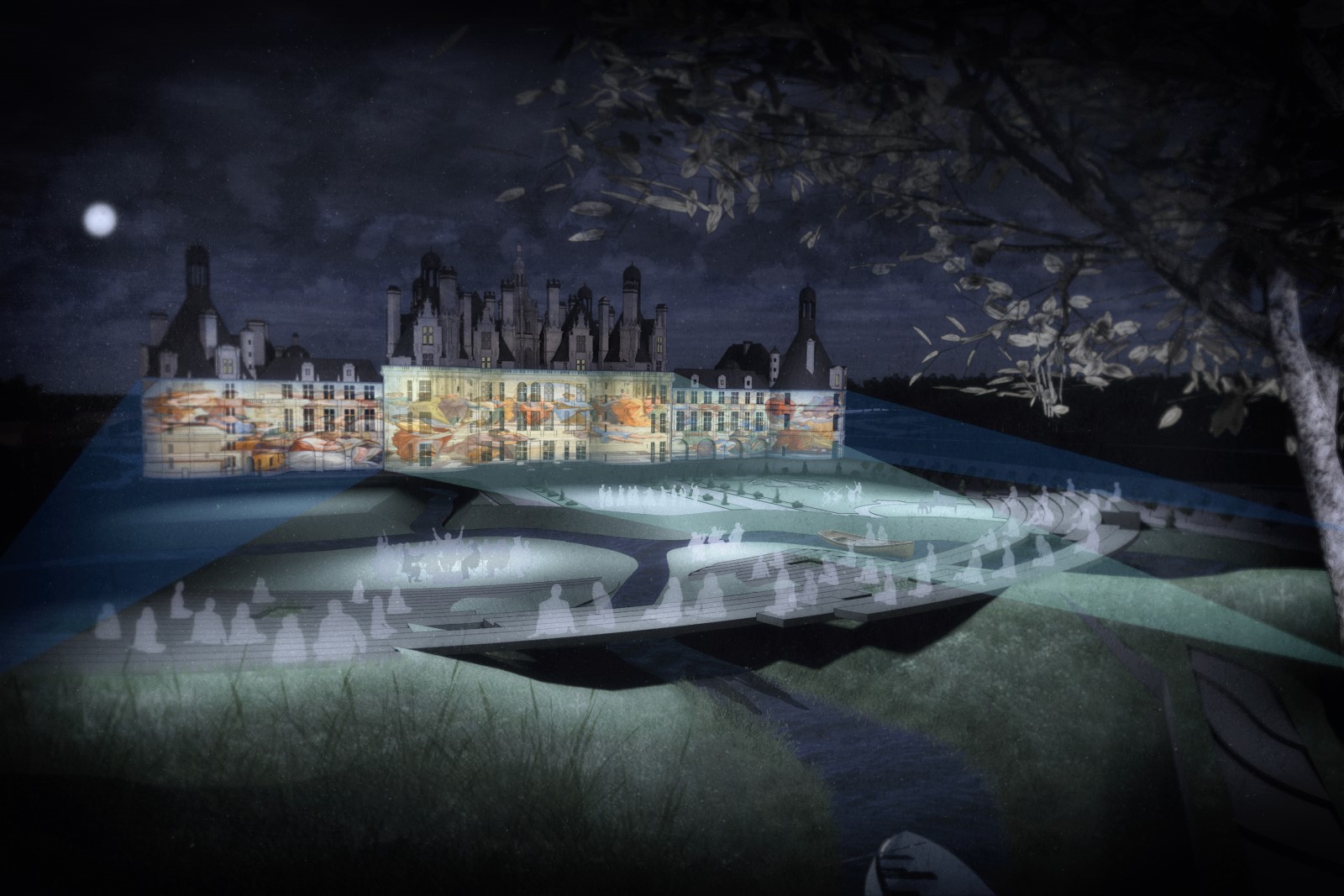
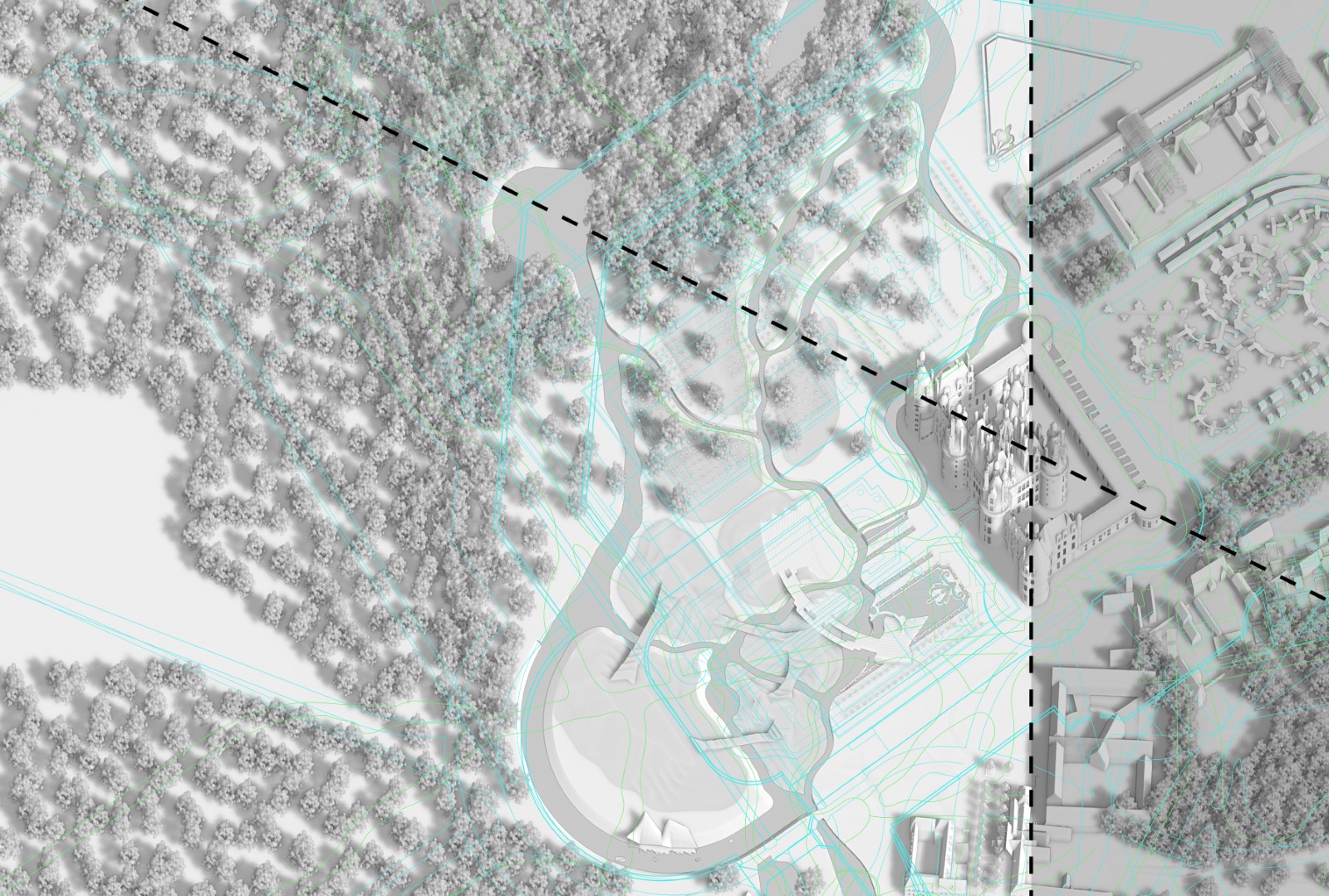
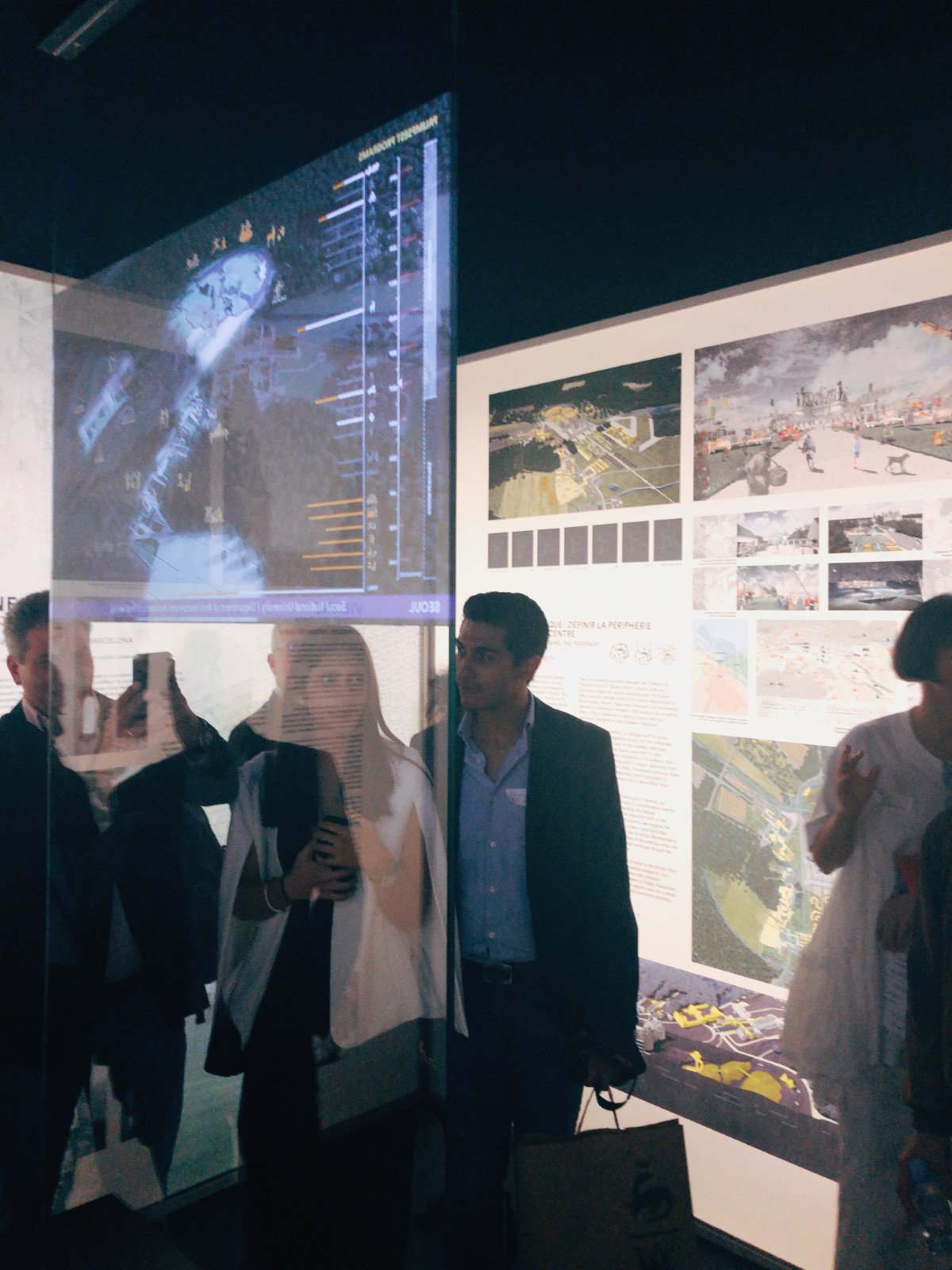
Like reconstructing More’s peninsula in reverse, our proposal for Chambord’s future is a simultaneous overlay of the past and present. Extending the diverse programming that marked the important shift of the château from private to public control, we imagine the extension and intensification of year-round activities, tightly integrated into the site and building. Reinterpreting and occupying the historical lines of the previous eras, the future of the site gains its flexible multi-use through the daily practice of the palimpsest. Finally, the historical confusion of what is the formal ‘front’ of the château is re-read as a positive ambiguity: Four programmatic fronts emanate from the château’s geometry, forming quadrants based on Trade, Production, Performance, and Nature. These regions work as a whole to posit utopia as a contingent and constantly evolving concept.
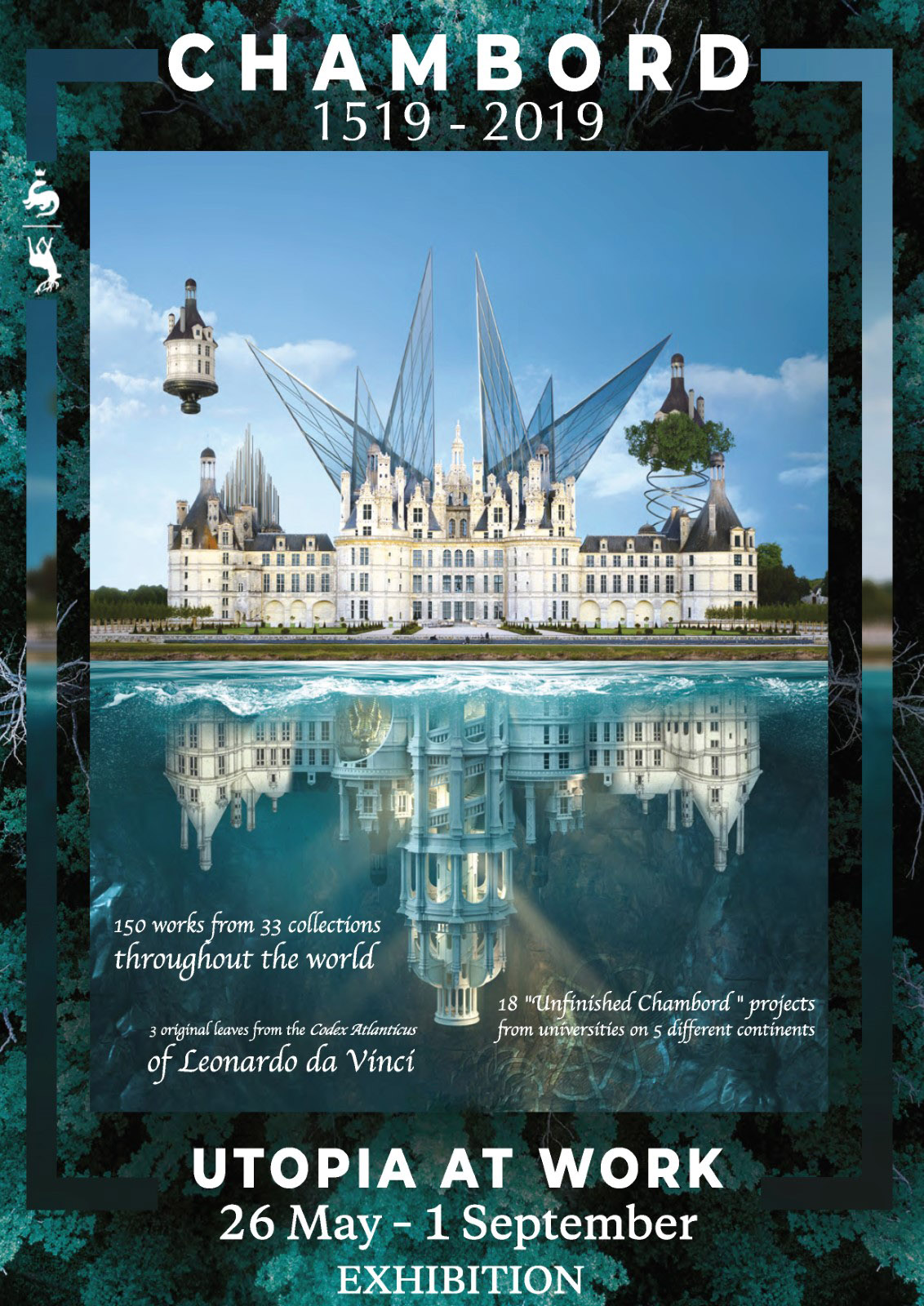
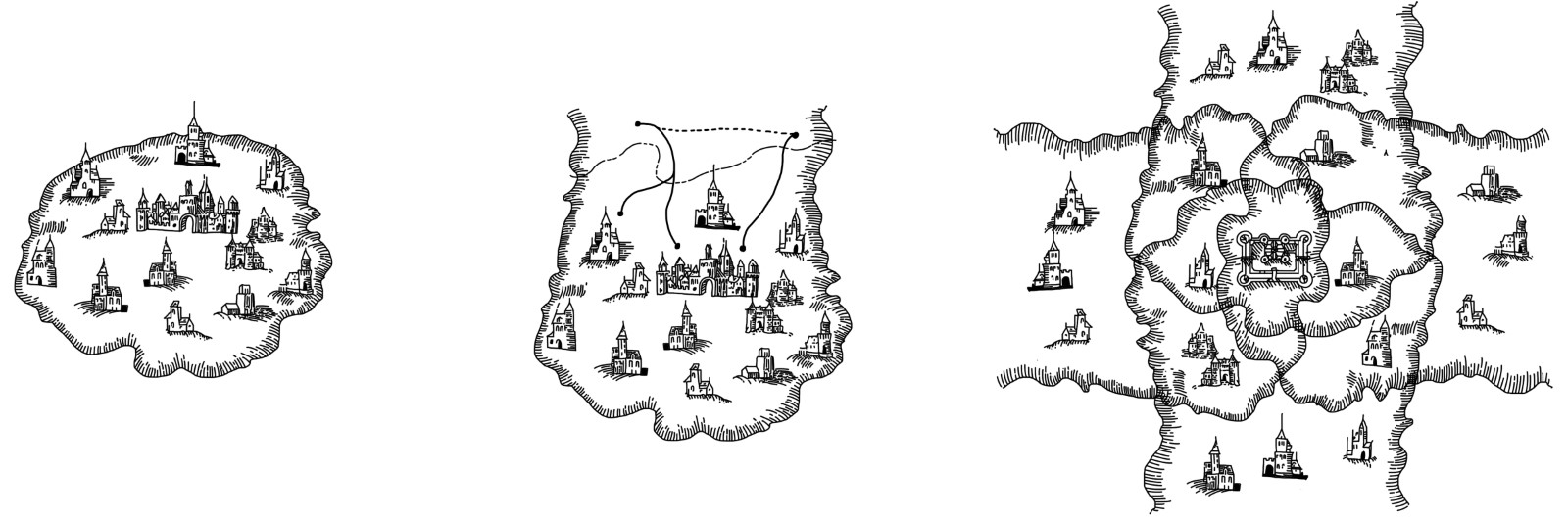
Contingent Utopia: Contrary to popular belief, Sir Thomas More’s original Utopia was a peninsula, not an island. By recovering this vision, we reconceive the walled-off Château de Chambord as a contingent, unfinished project.
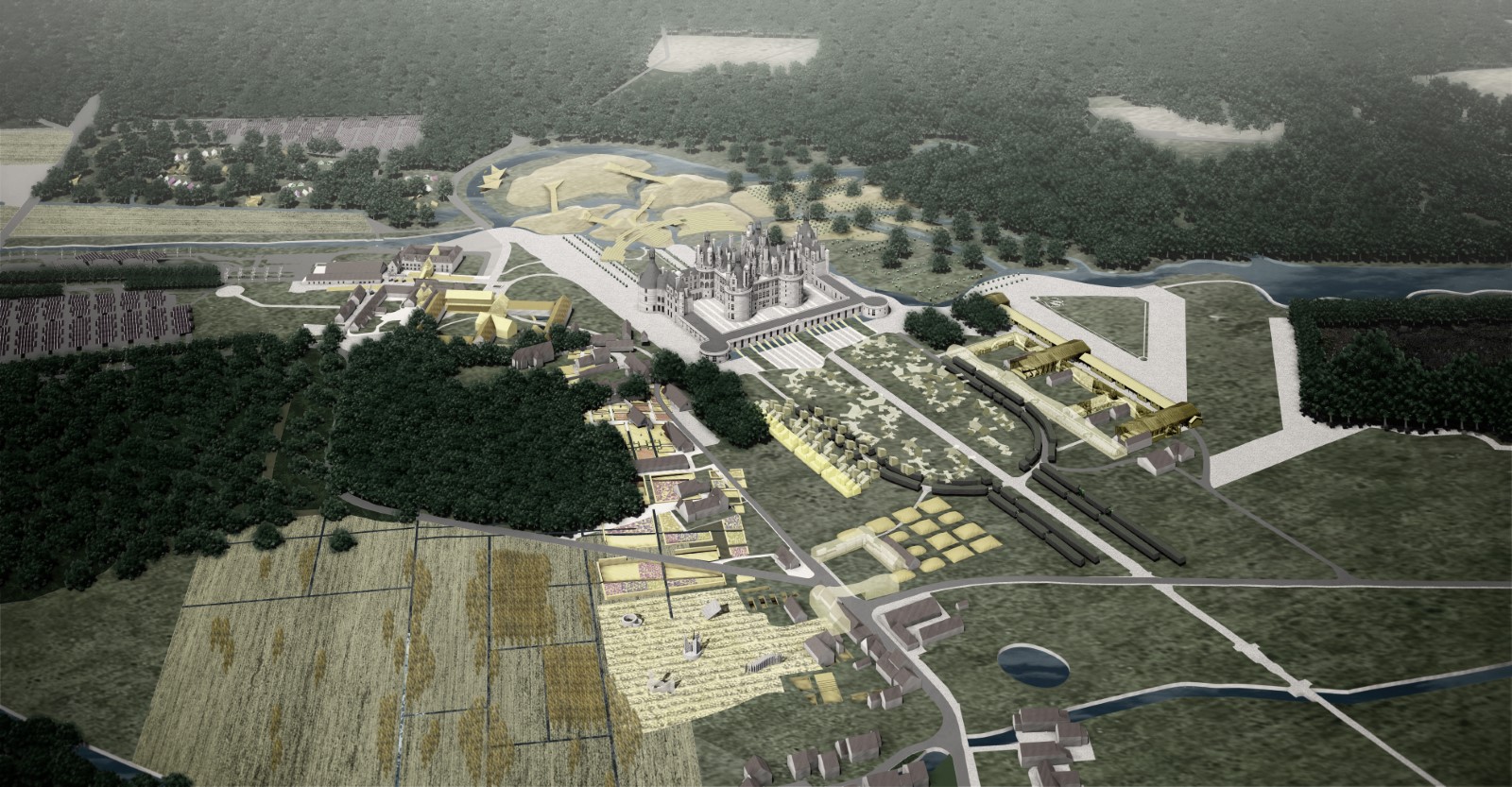

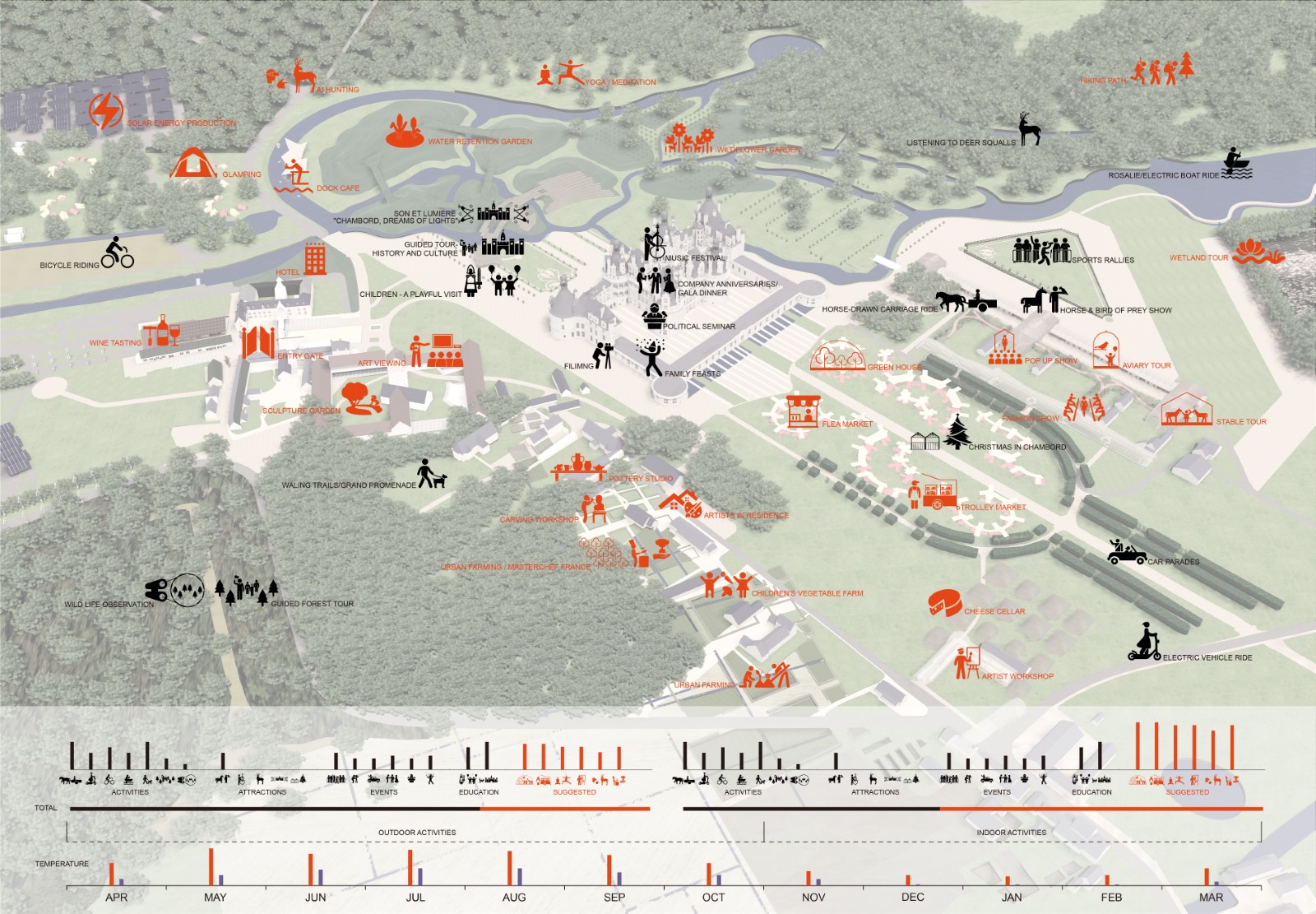
Crucially, the intersections of these zones create multivalent synergy. Urban farming emerges between production and trade. At the seam of performance and production, a massive solar array and an allée of wind turbines provide both energy and a monumental entry experience. This energy autonomy reflects the core ideal of utopian independence. Finally, at the intersection of Nature and Performance, a stable, aviary, and garden host intimate gatherings.



Project Team
John Hong AIA, LEED AP (lab director), Seungjae Kang (Lead Researcher), Jungho Kwon, Ah Young Kim, Won Seob Cho, Jiyeong Yi, Sohee Yoon, Hyein Kim
Exhibit Curator
Dominique Perrault
Organizer and Host
National Estate of Chambord
Related Posts
-
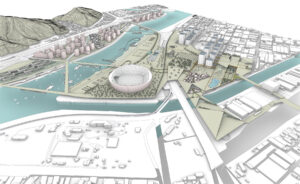
The Machine and the Garden
Like a living organism, “The Machine and the Garden” explores how the city can innovate and regenerate while healing Daegu’s damaged natural environment.
-

100 Years of Modern Architecture in Korea Exhibit
P : A’s Devious Topographies is featured in The Future We Have Drawn, an exhibition marking 100 years of modern architecture at SNU.
-
Seoul Biennale Opening Forum
John Hong discussed education and resiliency at the Seoul Biennale 2021, calling for deeper, collaborative, and cross-disciplinary architectural education to empower future designers.
-
City as Verb
City as Verb reframes the city as action rather than object, presenting 17 global cities that reveal urban life as active, participatory, and transformative.